
AI Prescription Safety Check
Make prescription review a deliberate step.
Use AI safety references as one part of professional medication review, alongside the prescription, allergy record and relevant patient history.
Consultations & clinical tools
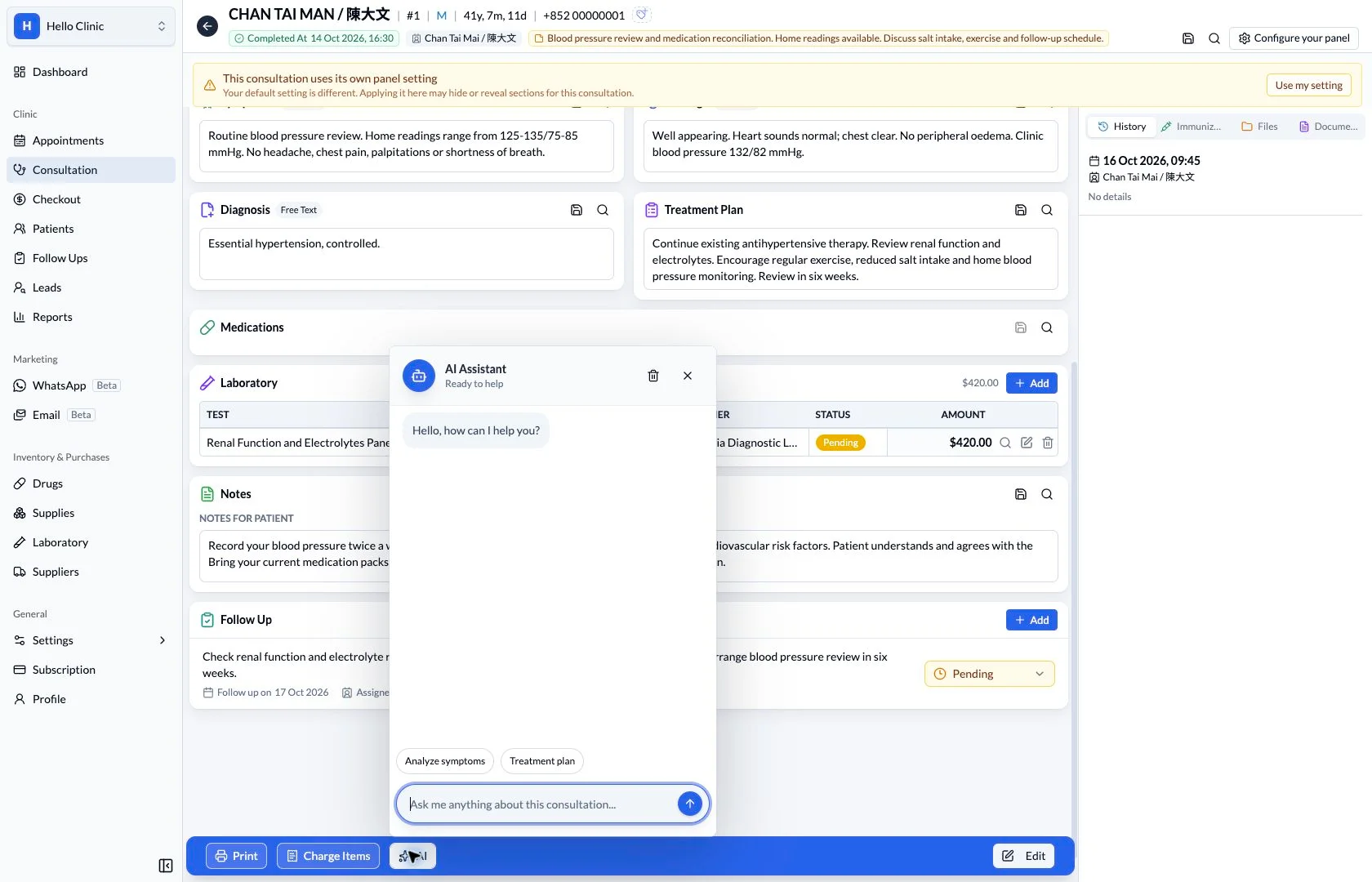
Make missing medication information explicit before completion
Medication review needs the medicine, directions and patient allergy context together. A clinician can provide explicit prescription details to the AI assistant and ask it to organise points requiring verification, then return to the prescription and record to make the decision.
- Doctor
- Check the prescription and patient context and independently assess the reference.
- Dispensing staff
- Check medicines, quantities and labels against the clinician’s confirmed prescription.
Start with what the prescription actually records
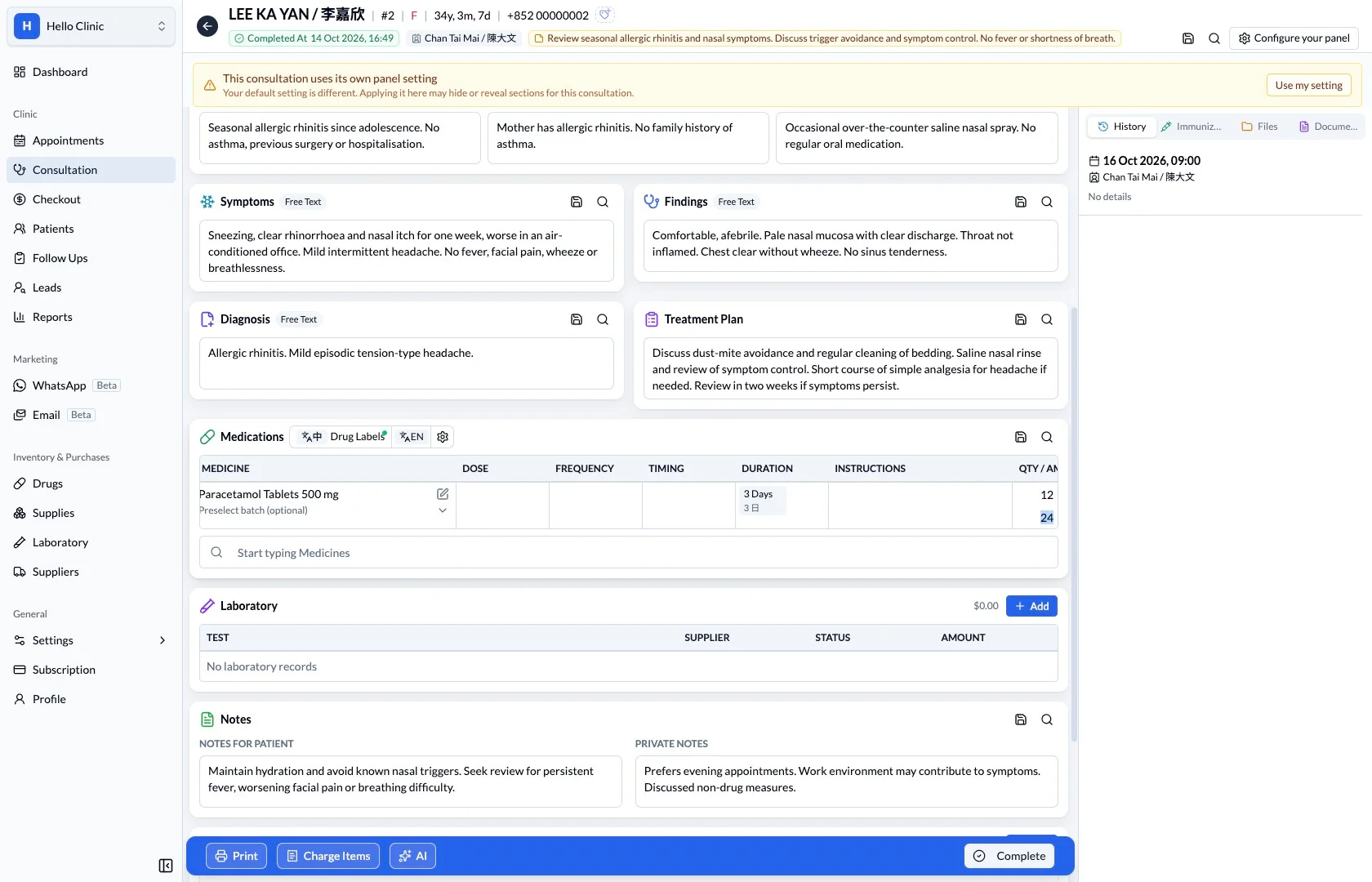
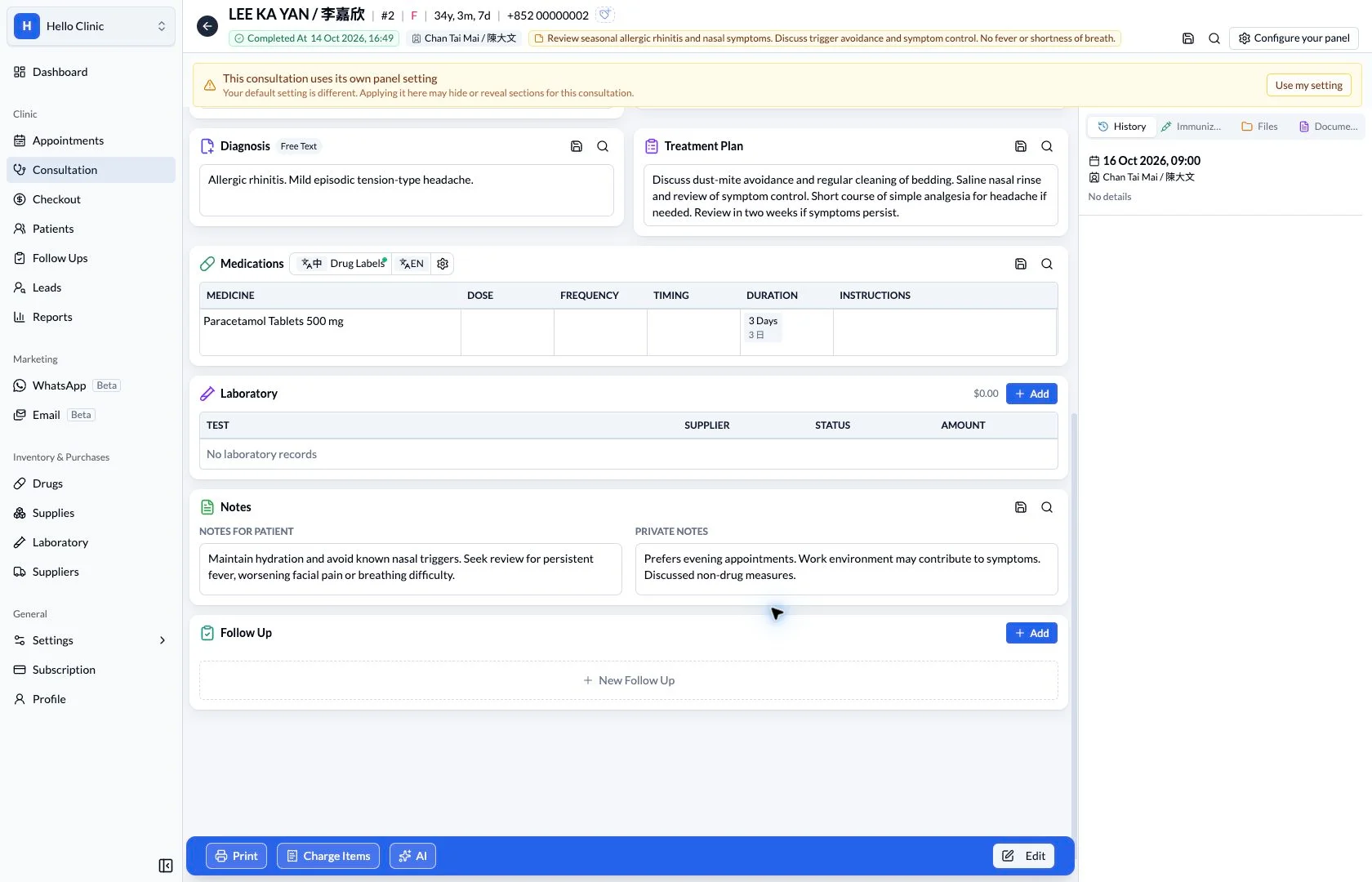
The prescription separates the medicine, dose, frequency, timing, duration, instructions and quantity. Review which fields are complete and which still need attention. A total quantity alone should not be used to infer directions that have not been recorded.
- Check the medicine, strength and the relevant prescription line.
- Identify blank or unclear fields for clinician confirmation.
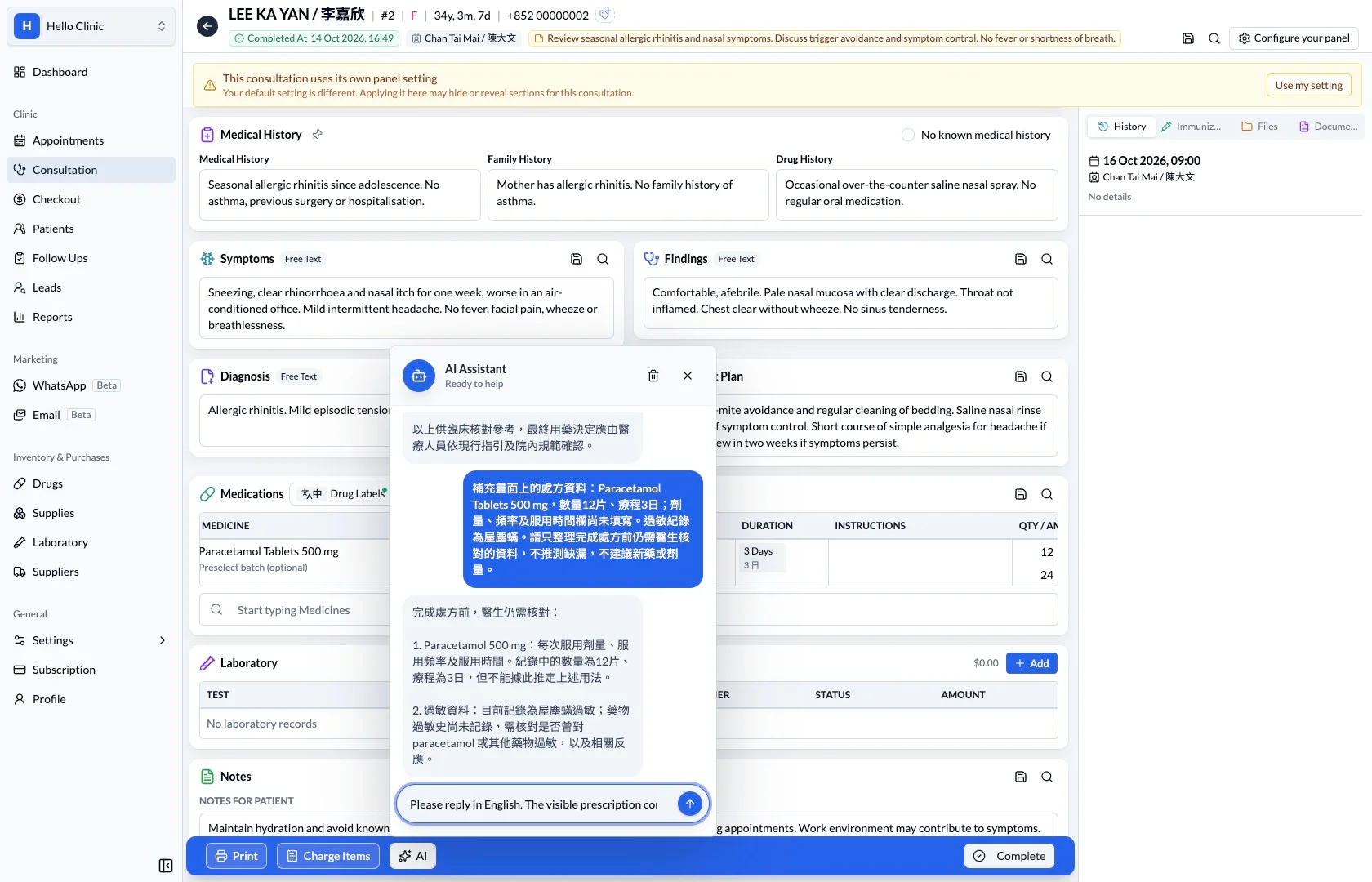
Give the assistant explicit prescription and allergy context
A question can include the visible medicine, quantity, duration, incomplete fields and recorded allergies. Clearly stating the known information and the scope of review makes it easier for the clinician to judge whether the response is grounded in the case.
- Verify the medicine and patient context included in the question.
- Keep missing fields distinct from confirmed information.
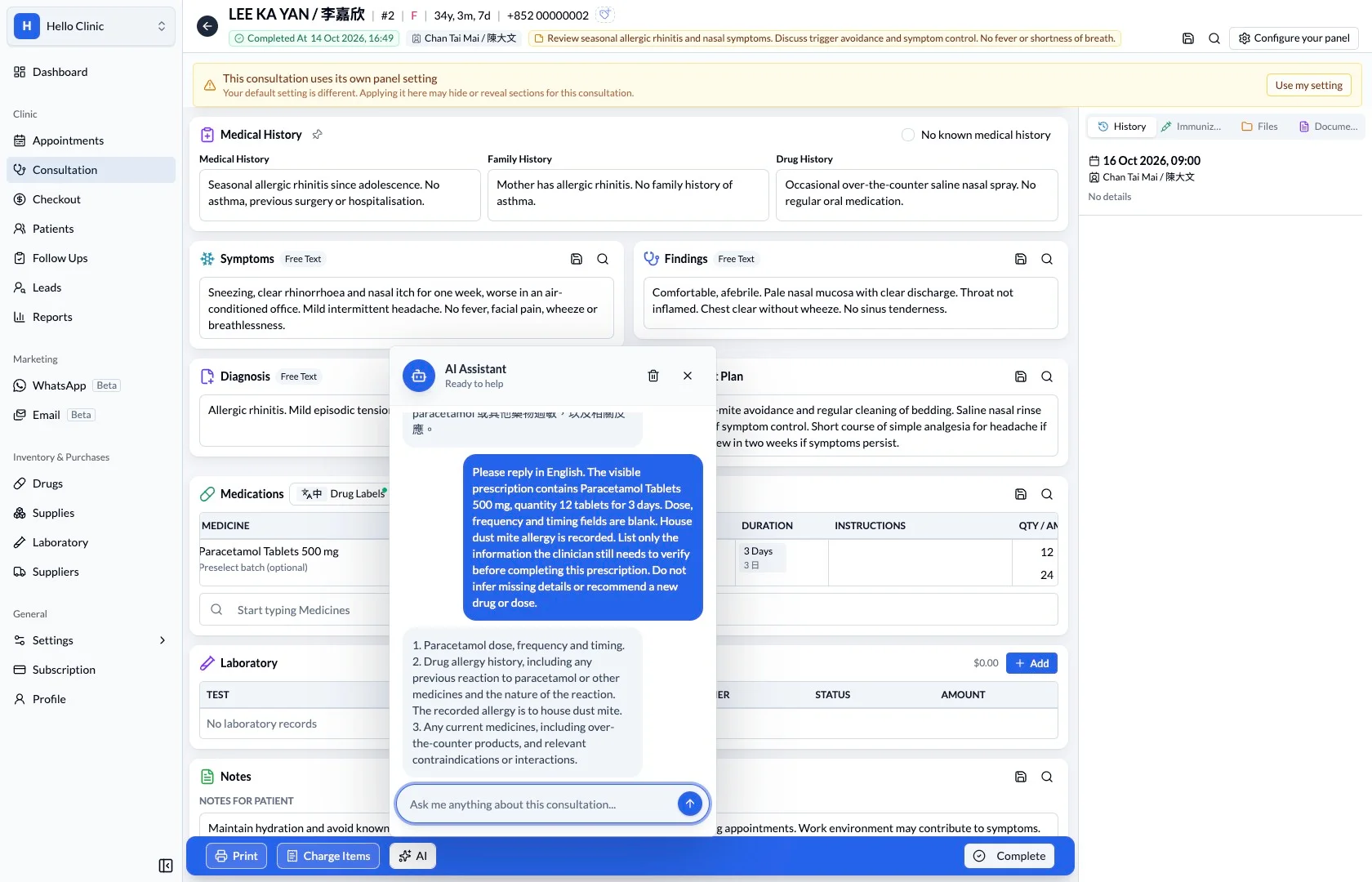
Use the response as a list of points to review
The response can identify points such as dose, frequency, timing and drug allergy history that need verification. The clinician checks each point against the record and prescription, resolves uncertainty and determines the actual medication plan.
- Check whether the response goes beyond the information supplied.
- Pass the confirmed prescription to dispensing staff through the formal record.
What this helps you do
Prescription context
Review the selected medicine, quantity and directions.
Patient context
Cross-check allergies, medical history and other medication information.
Human judgement
Treat recommendations as prompts for review, never as a guarantee of safety.
A deliberate review
Confirm the prescription details.
Review relevant safety references.
Resolve concerns before finalising the prescription.
A recommendation still needs verification.
Clinical review remains necessary even when an automated tool raises no concern.
Keep the next handover clear
The clinician should resolve the points raised and complete the required information in the actual prescription. An absence of concerns is not a safety guarantee. Dispensing and patient instructions still follow the clinic’s professional review process.