
Consultation Workflow
Keep the whole consultation in view.
Bring vitals, allergies, history, clinical notes, medications and investigations into one consultation workspace.
Consultations & clinical tools
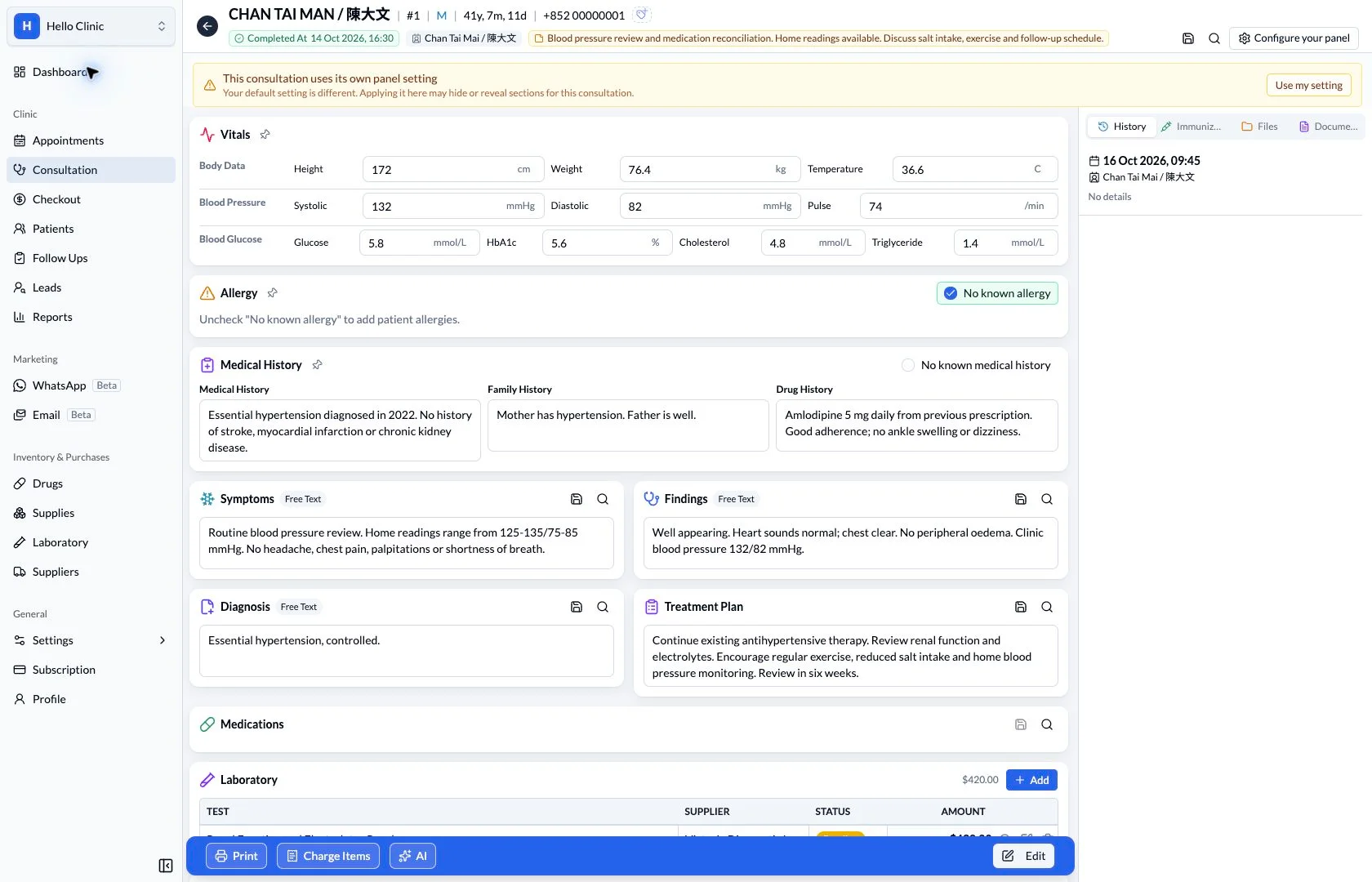
Carry one consultation from preparation to handover
A consultation starts with the patient’s background, then moves through symptoms, findings and the plan. The workspace brings these together with orders, notes and follow-up work, giving the clinician a connected place to handle the current visit.
- Doctor
- Review context and document the consultation and orders.
- Nurses and front desk
- Use the handover to coordinate investigations, checkout and follow-up.
Review context before the current complaint
Vitals, allergies and history sit within the consultation workspace. Before documenting the current visit, the clinician can review recorded measurements, allergy status and medication history, with previous records available in the neighbouring panel.
- Distinguish recorded information from details still needing confirmation.
- Confirm the patient and visit being handled.
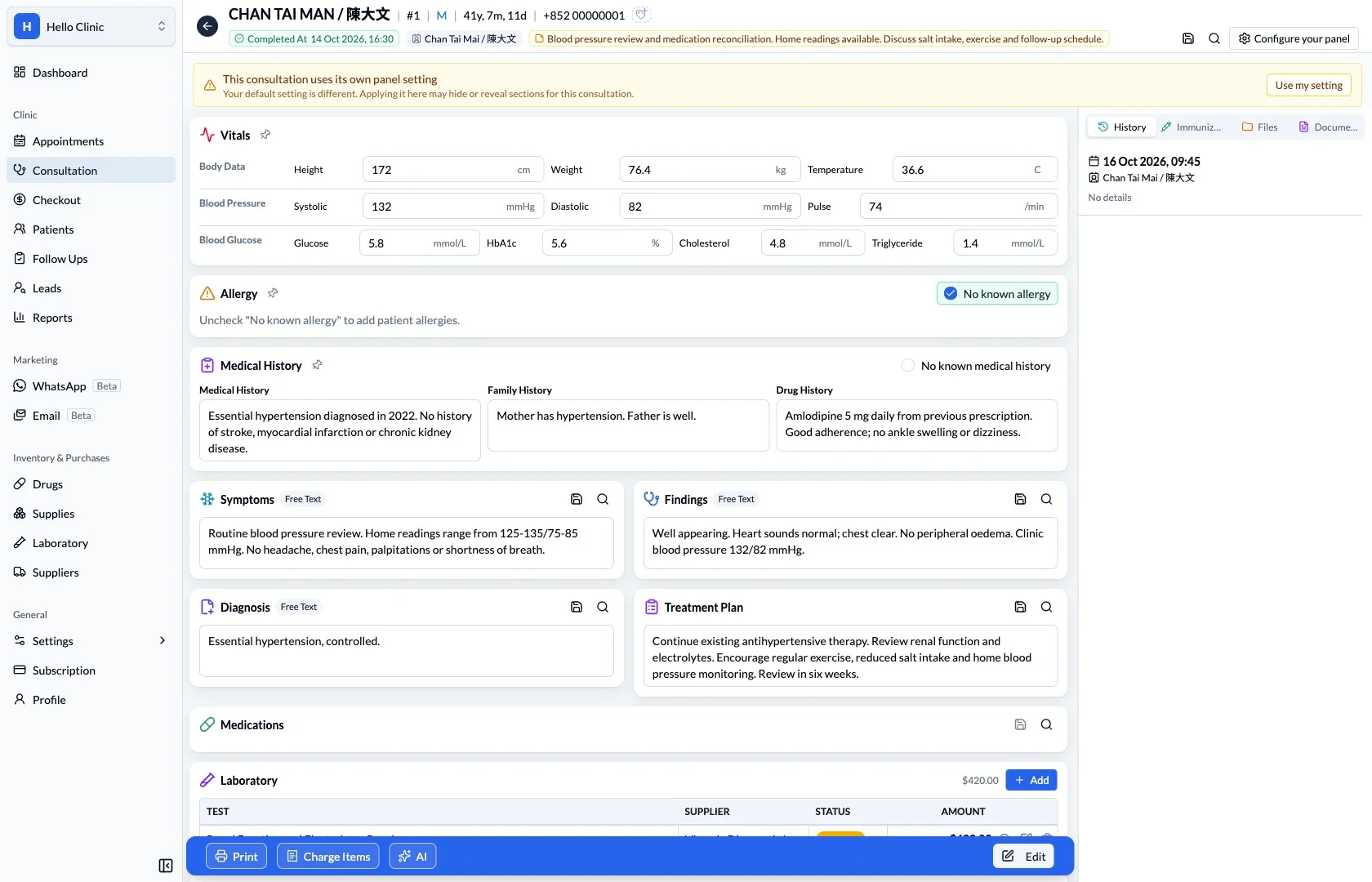
Organise the note with sections and templates
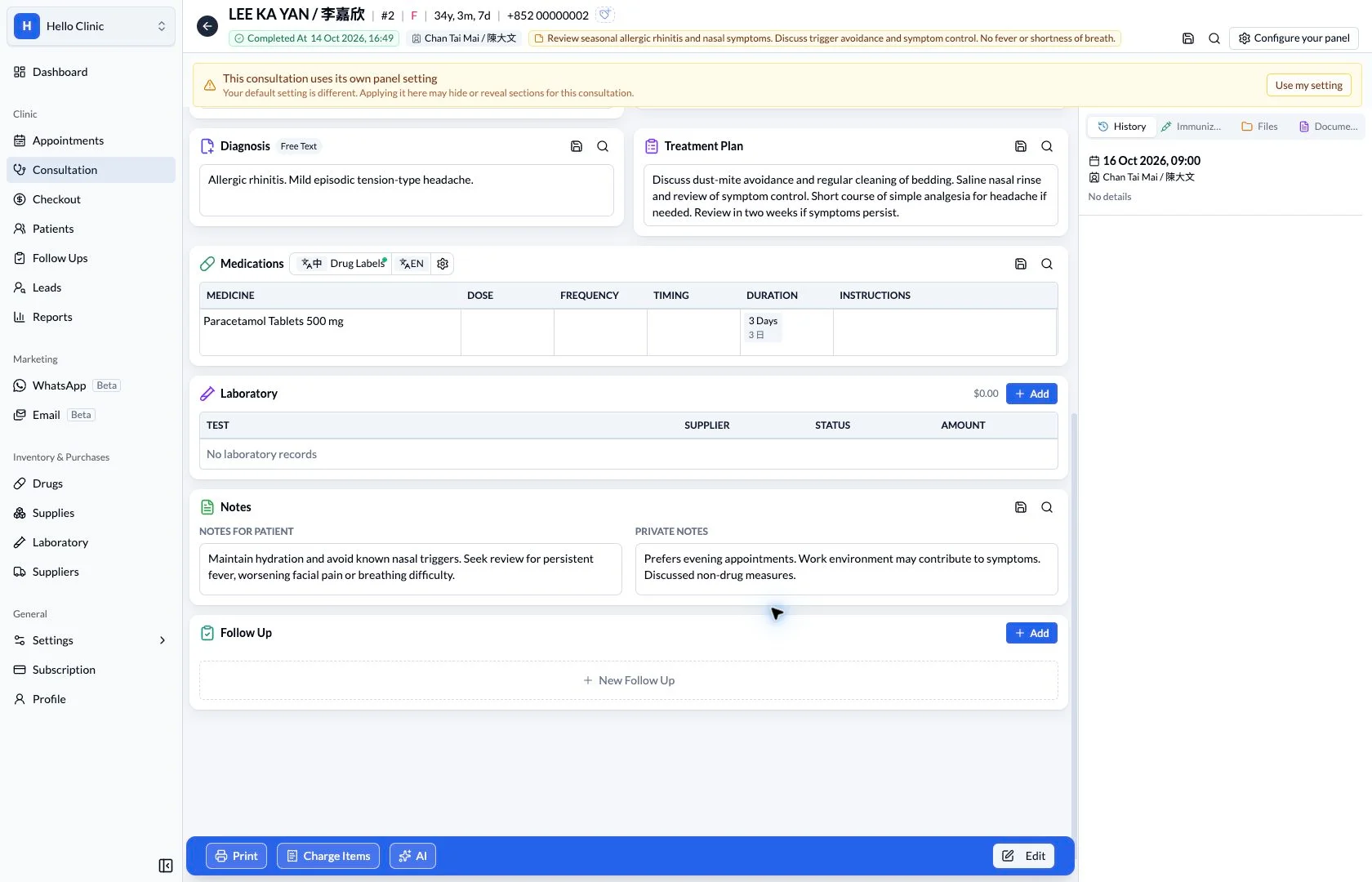
Symptoms, findings, diagnosis and the treatment plan are presented separately. Section-specific template entry points help clinicians find reusable content, then adapt it to the current patient and visit while retaining the clinical narrative.
- Treat a template as a starting point and review it for the current visit.
- Keep case-specific detail in the free-text fields.
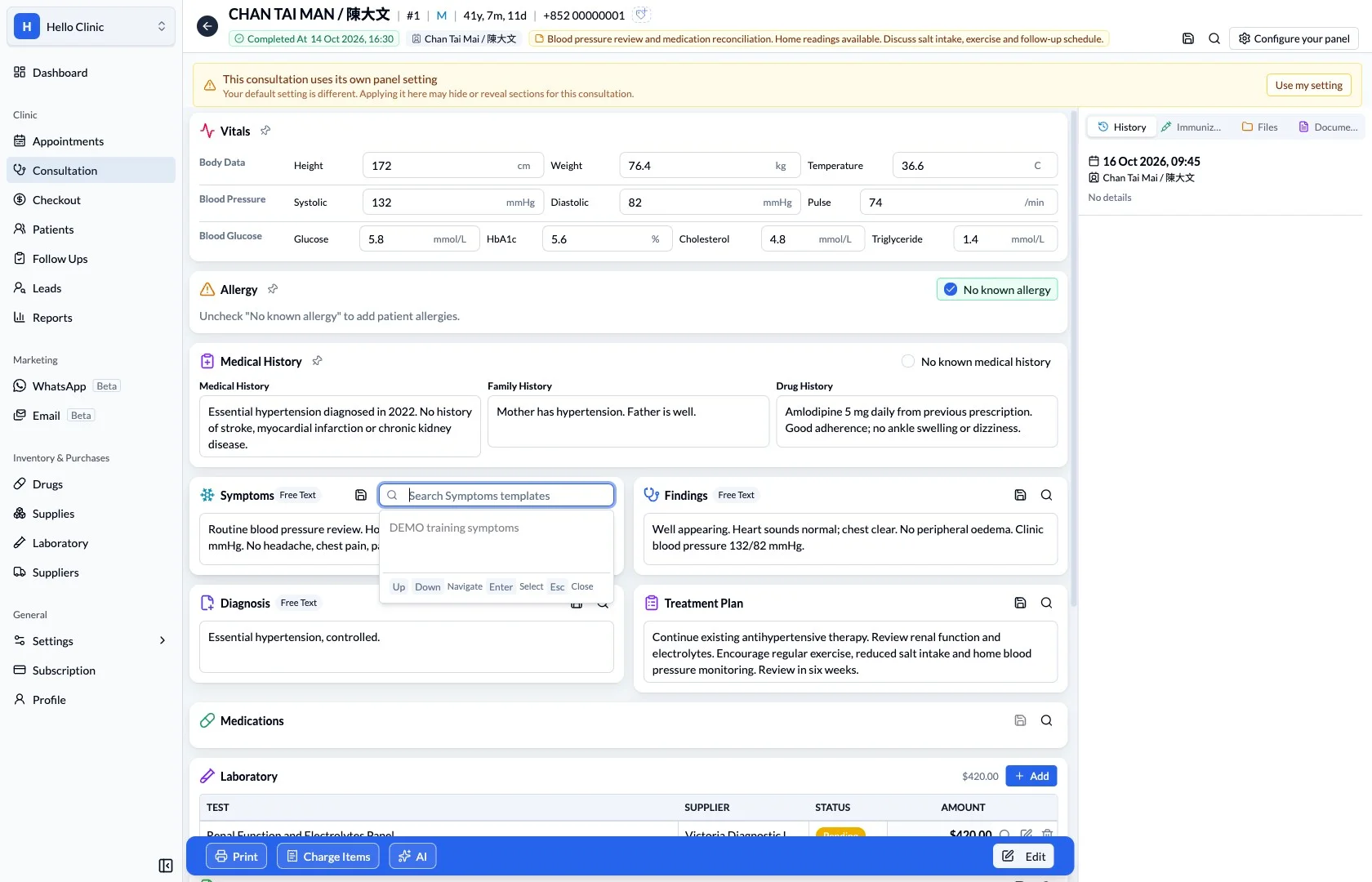
Make the plan usable by the next colleague
Prescriptions, laboratory orders, patient notes and follow-ups continue the clinical plan. Review the work that needs to be handed over before completing the consultation, and use dated follow-ups with an owner for tasks that continue beyond the visit.
- Separate information for the patient from internal notes.
- Make the purpose, date and owner of follow-up work clear.
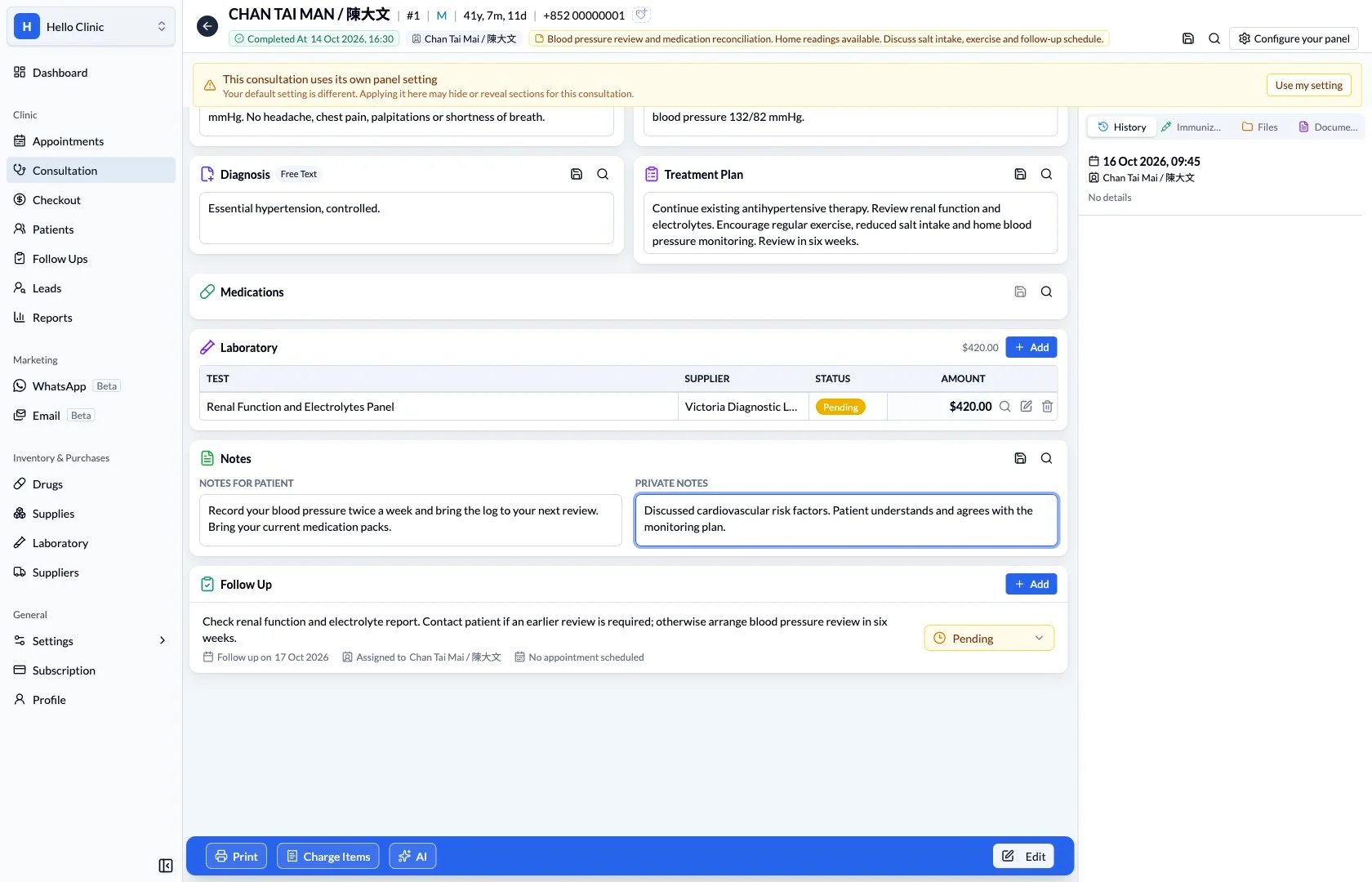
Less searching between separate records.
The consultation workspace places clinical sections beside a history and document panel. Doctors can review the current visit with previous records close at hand.
How it fits the clinic day
Review the patient’s clinical context.
Document the consultation.
Check orders and the follow-up plan.
What this helps you do
Patient context
Review vital signs, allergy status and relevant history before documenting care.
Clinical record
Keep symptoms, findings, diagnosis and the treatment plan together.
Next actions
Connect prescriptions, investigations and follow-up work to the consultation.
Keep the next handover clear
Before completing the visit, review the record, orders and follow-up plan together. Patient notes, internal notes and dated follow-up tasks have separate places, helping the next colleague distinguish completed work from what still needs attention.